Understanding Stitch Types: Which One Is Right for Your Product?
1. Why Stitch Types Matter Different stitch types serve different purposes: Durability: Stronger seams for workwear or outerwear Comfort: Flat seams reduce chafing in activewear Aesthetics: Visible vs.
1. Why Stitch Types Matter
Different stitch types serve different purposes:
-
Durability: Stronger seams for workwear or outerwear
-
Comfort: Flat seams reduce chafing in activewear
-
Aesthetics: Visible vs. invisible stitching for style impact
-
Fabric compatibility: Some fabrics need stretchy or reinforced stitches
At HEM APPAREL, we often advise clients on which stitch fits best with their fabric and product goals.
2. Common Stitch Types and When to Use Them
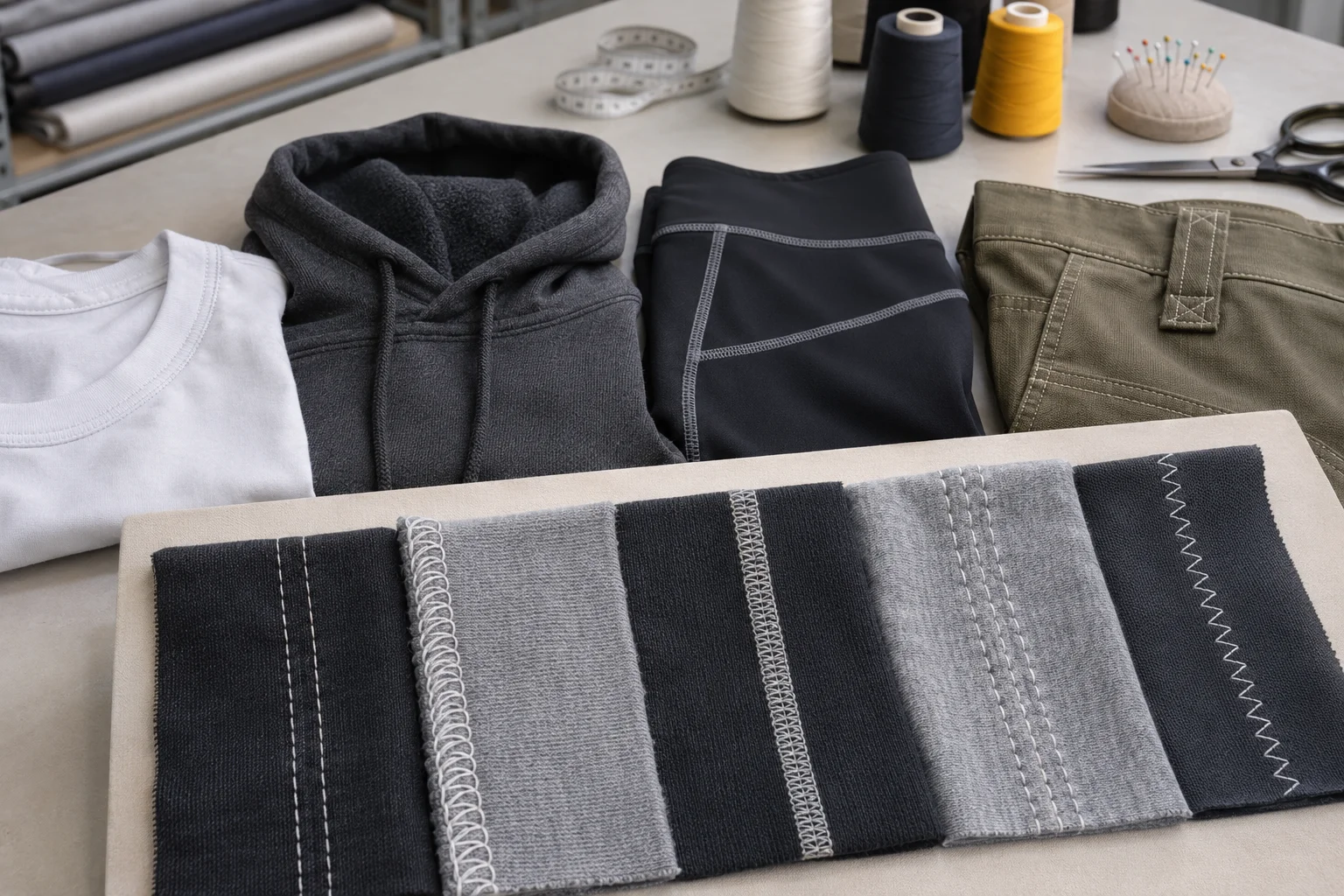
| Stitch Type | Description | Best For |
|---|---|---|
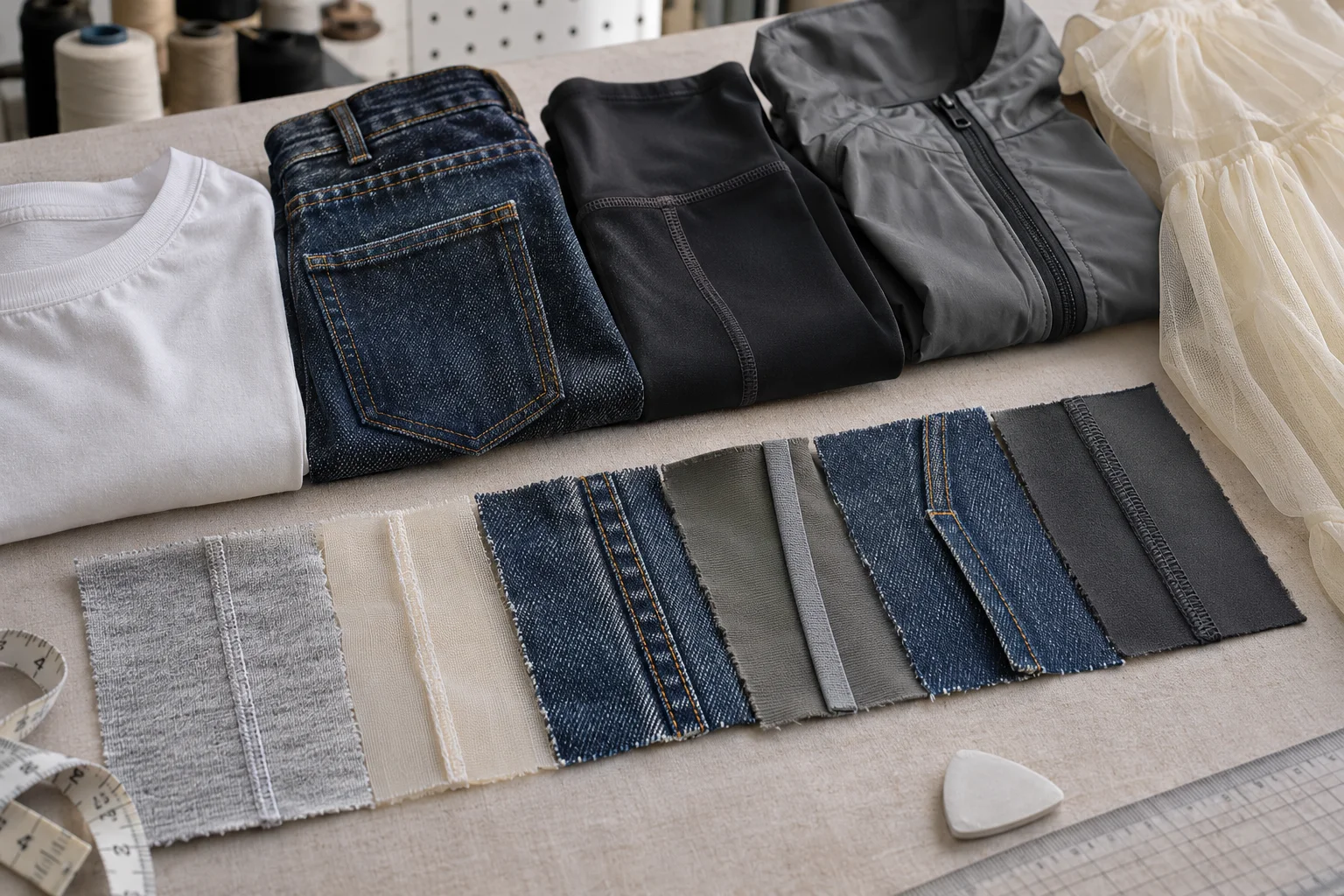
| Lockstitch | Standard straight stitch using top & bottom thread | Most woven garments, strong seams |
| Overlock (Serger) | Finishes raw edges, prevents fraying | T-shirts, knits, side seams |
| Flatlock | Joins fabric edge-to-edge, lays flat | Activewear, leggings, base layers |
| Coverstitch | Two rows on top, loop underneath | Hems of T-shirts, stretchy knits |
| Zigzag Stitch | Allows stretch, simple machines | Temporary seams, knit reinforcement |
3. Stitch Type vs Garment Function
| Garment Type | Recommended Stitch Types |
|---|---|
| T-shirt (knit) | Overlock + Coverstitch |
| Hoodie (fleece) | Overlock + Topstitch for strength |
| Leggings | Flatlock (for comfort) + Reinforced seams |
| Work pants | Lockstitch + Bartack at stress points |
Reinforced seams = longer garment life + higher perceived quality.
4. Stitching as a Design Detail
Stitching isn’t always hidden — sometimes it’s a feature:
-
Contrast thread: Highlight seams in a bold color
-
Decorative topstitching: For rugged or vintage looks
-
Flatlock exposed seams: Common in gymwear and techwear
HEM APPAREL can match thread color, stitch width, and placement to your design intent.
5. What to Discuss with Your Manufacturer
When sending in your sample or tech pack:
-
Specify visible or invisible stitching
-
Indicate stitch width (e.g. 3-needle flatlock)
-
Ask for reinforcement at high-stress points (e.g. underarm, pocket corners)
-
Don’t assume — some stitches need special machines!
Conclusion
Choosing the right stitch type is key to making garments that look good, feel right, and hold up over time. Whether you’re working with knits, wovens, or performance fabrics — the right seam makes all the difference.
HEM APPAREL – Your trusted manufacturing partner for high-quality custom apparel, made in Vietnam
Last updated: